
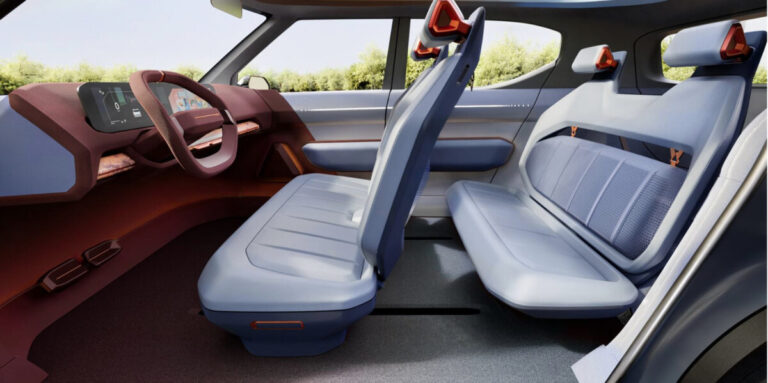
Foto: KIA Webite
The Kia EV2 bursts onto the scene and transforms it. Climate change and sustainability goals have gained increasing importance in our world. The EV2 stands out as an exceptional electric SUV. Milan Design Week showcased it in 2025. This idea car runs on batteries and features organic, biodegradable, and recycled materials, mostly hemp. The EV2 boldly asserts its position in the car business: being environmentally friendly involves not only lowering emissions but also transforming the materials used in car manufacturing.
Kia used a concept called “materials first” in its design, which made the inside feel more like a living thing than a normal car cabin. Hemp is one of the best natural products in this group. Kia has used hemp-based composites in many parts of the inside of the EV2 by working with new companies like Biomyc. These materials don’t just help the environment; their organic textures, durability, and ability to break down naturally help rethink what it means to be luxurious in a car.
Why hemp?
Hemp is gaining popularity. It’s a great choice for eco-friendly building. There are good reasons for this. It absorbs more CO₂ than many industrial crops and grows fast. It also requires little water and few pesticides. Hemp fibers are strong. They are lightweight. They insulate naturally. This makes them ideal for car interiors.
The EV2 features panels and soft-touch surfaces which are made from hemp, mycelium, and other natural fibers. These parts benefit the earth. They look great. They give the car a unique warmth. Synthetic plastics can’t match that.
Kia and Biomyc work together to make progress
The Bulgarian startup Biomyc was very important in making Kia’s hemp and mycelium parts. Biomyc was tasked with making internal parts that worked well and looked good. To meet Kia’s exacting standards for style, they used a special molding process and eco-friendly color treatments.
Biomyc didn’t just make materials; they also tried more than 180 different mixes of paints, coatings, and finishes to make sure their hemp-based materials met strict standards for performance and sustainability. The end result is a line of interior pieces that are long-lasting, beautiful, and made entirely from plants.
Atanas Enev, the founder of Biomyc, called this partnership “a major step toward the widespread adoption of mycelium and hemp-based materials in the auto industry.” Now that Kia is on board, the move from concept to production looks more likely than ever.
Sustainability from the outside to the inside
A room inside the Kia EV2 feels like it belongs in a botanical garden, not a garage, as soon as you step inside. Besides hemp and fungus, the car also uses Fybron consists of a molded cellulose blend crafted from recycled fabrics, wood, and paper. AmpliTex serves as a flax-based biocomposite that replaces plastic. Linen fibers and recycled t-shirts create soft surfaces such as armrests and seat cushions.
These materials not only look nice and benefit the environment; they also enhance the functionality of the space. Backrests feature built-in speakers, cushions detach easily, and seats fold up to transform your car into a mobile lounge. The design showcases smart, flexible features that prioritize people and promote environmental friendliness.
The Kia EV2 is environmentally friendly in more ways than one. The lens-free front light assemblies and the suicide doors that open outward enhance access, ensuring every part of the car facilitates easier movement in cities while minimizing environmental impact. This idea stands out because of its material innovation, driven by hemp. Kia emphasizes that the materials used in a car hold equal importance to its performance. The EV2 is more than just an SUV in this way; it’s a “vision statement” for what the industry could become when speed meets eco-friendly design.
What will happen next with the EV2?
Kia has announced plans to mass-produce the EV2 in 2026, targeting prices between €20,000–€30,000 ($30,000–$40,000), even though it remains just an idea for now. This car will compete directly with other popular electric vehicles, but it will provide something none of them currently offer: a car that has grown, not just been built.
Kia hopes to keep at least 70% of the concept’s material improvements when the production version comes out. If even a small part of the EV2 & hemp concept makes it to showrooms, it could be the start of a new era in car design.
The Kia EV2 is more than just a car; it shows what’s possible when fashion, science, and the environment all come together. Hemp used to only be used for ropes and fabrics, but now it’s being used to make the interiors and panels of cars of the future. And Kia wants it to be just the start. As towns get smarter and people become more eco-aware, the EV2 shows us how to move forward without destroying the environment.