
We spoke with Daniel Kruse, CEO of SYNBIOTIC SE, to learn more about the future of the industrial hemp industry after the very interesting panel discussion on “The Evolving Industrial Hemp Industry” at the International Cannabis Business Conference (ICBC) in Berlin over a month ago.
In this discussion, Kruse describes the profound changes influencing hemp’s future, including innovation and regulation, as well as therapeutic discoveries and climate change remedies.
Redefining the image of hemp
The European Court of Justice’s decision that CBD is not a narcotic and the raising of the THC threshold for industrial hemp to 0.3% are two of the most important legal clarifications at the European level, according to Kruse, when asked about the most important developments in industrial hemp over the previous five years.
“This aligned European standards with international standards and allowed for more extensive cultivation and cross-border trade, which is essential for establishing credibility and scale in an industry that is still fragmented,” he says.
For Kruse, the most profound change involves narrative rather than just legal aspects. Today, people view hemp as more than merely a cannabis derivative. Rather, it positions itself increasingly as a climate-positive, multi-sector resource. Various industries show significant interest in the plant’s environmental qualities, ranging from hempcrete in construction to bioplastics in packaging. Today, people view hemp as a therapeutic, industrial, and ecological remedy. That change will secure its position in the mainstream economy.
Medical precision and worldwide momentum
Kruse is especially enthusiastic about the development of cannabis in the medical field during the next ten years. He claims that we are transitioning from a gray area to cannabis-based medicine that is clinically accurate and pharmaceutically rigorous. He cites the introduction of cannabis pastilles, an exact-dosage form that enhances patient satisfaction and prescription dependability, in Germany as an example.
However, hemp’s potential extends beyond medicine. Sustainability-driven enterprises use hemp as a raw material in building, textiles, and even automobile parts across continents.
“Cannabis and hemp increasingly serve as a multipurpose tool addressing some of the biggest challenges of our time—from chronic pain to carbon reduction,” Kruse says, highlighting the plant’s dual-use potential.
Synbiotic SE: establishing a platform rather than just a business
Hemp is a strategic asset of SYNBIOTIC SE, not just a crop. SYNBIOTIC is a buy-and-build ecosystem that includes integrated companies across the whole value chain, from processing and farming to cosmetics, health, nutrition and medicine.
Improved bioavailability in hemp-derived health formulations and novel consumer products that combine sustainability and wellbeing are examples of recent developments. According to Kruse, “these aren’t particularly eye-catching headlines, but they’re precisely the kind of structural foundation that opens up hemp’s full potential.”
The company’s R&D strategy likewise prioritizes collaborations over silos. One noteworthy project is SYNBIOTIC’s partnership with GOC NEXUS to use cold plasma technology, which with advancing environmental, safety, and efficiency advantages.
Crop for the era of climate change
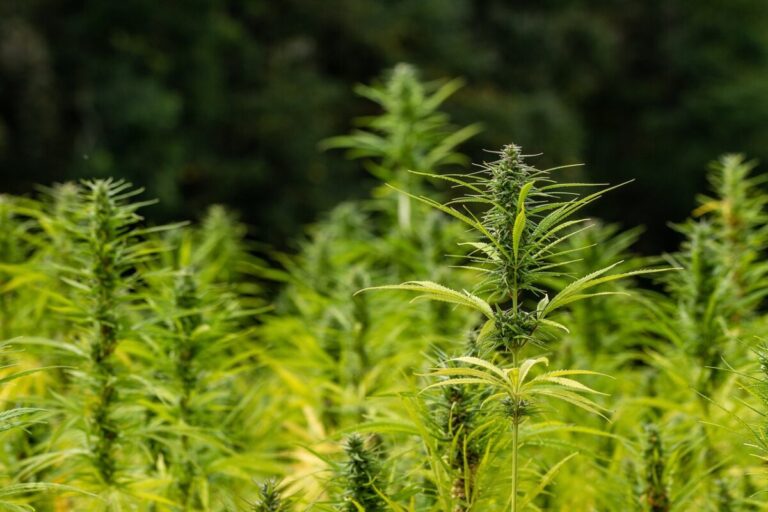
Regarding hemp’s promise for the environment, Kruse is unwavering. He claims that it’s one of the only crops that quickly and effectively addresses climate goals on several levels. Up to 20 tonnes of CO₂ can be sequestered annually by one hectare of hemp, and the carbon is trapped into durable materials like textiles or hempcrete. It is the perfect foundation for regenerative agriculture because of its short growth cycle, soil-regenerating roots, and low requirements for water and pesticides.
However, the international industry needs to take immediate action to fulfill that promise. According to Kruse, “we need to update legal frameworks that are decades behind the science, address processing bottlenecks, and adopt regenerative practices.” “And everyone, from the general public to policymakers, needs to be educated.”
Regulatory deadlock in Europe: the unspoken problem
Hemp still faces stigma and structural barriers despite its many benefits, particularly in the EU. Kruse highlights several pressing regulatory issues, including the THC threshold that limits agricultural efficiency, and Germany’s so-called “intoxication clause,” which criminalizes hemp products based on hypothetical misuse. He says, “This produces a chilling effect.” Even fully legally operating enterprises are subject to police raids. Items are removed off the shelves. Investors are hesitant. Without a harmonized framework, Europe risks ceding leadership in a market ripe with sustainable promise. The answer? Regulation based on science.
“Hemp must be treated as what it is: an industrial crop, not a relic of outdated narcotics law.”
Infrastructure, investment, and trust
Investment hesitancy, Daniel Kruse argues, doesn’t stem from hemp’s fundamentals—it’s the fog of uncertainty surrounding regulation and supply chains. “Investors see big chances, but they also still see a bit of risk. A product that is permitted today might be prohibited tomorrow. Add to that the lack of robust processing infrastructure, and it’s clear why big capital remains cautious.
Kruse is hopeful, though. “These are fixable problems,” he says. “With stable regulation, clear standards, and public understanding, industrial hemp can become a mainstream investment—perfectly aligned with ESG goals and long-term value creation.”
Shifting perspectives, fostering confidence
For hemp to truly thrive, education is essential. Daniel Kruse notes that the confusion around hemp and high-THC cannabis is not accidental but a product of decades of misinformation. “We have to actively reshape the narrative.” SYNBIOTIC does this through direct stakeholder engagement and real-world product visibility. From medicine to bioplastics to textiles, tangible examples of hemp’s benefits create trust. “Fear fades. Logic takes over.”
Policymakers need more than white papers—they need immersive exposure to the sector. “When they see the professionalism and innovation firsthand, old prejudices give way to insight.”
2030: The Hemp Horizon
Looking ahead, Kruse envisions a 2030 where hemp is deeply embedded in the global green economy. “We’ll see hempcrete in buildings, hemp fiber in cars and clothes, cannabinoids in personalized medicine, and fully integrated carbon farming systems.”
Europe, he hopes, will have unified its laws, shedding legal patchworks in favor of streamlined, science-led frameworks. “By then, we’ll have built not just a business but a model for a new kind of industry—one that fuses sustainability, science, and strategic innovation.”
At SYNBIOTIC SE, the vision is clear. Hemp is not a trend. It’s a foundation for a regenerative future. And they’re not just watching it unfold—they’re building it, one partnership, one product, and one policy shift at a time.