
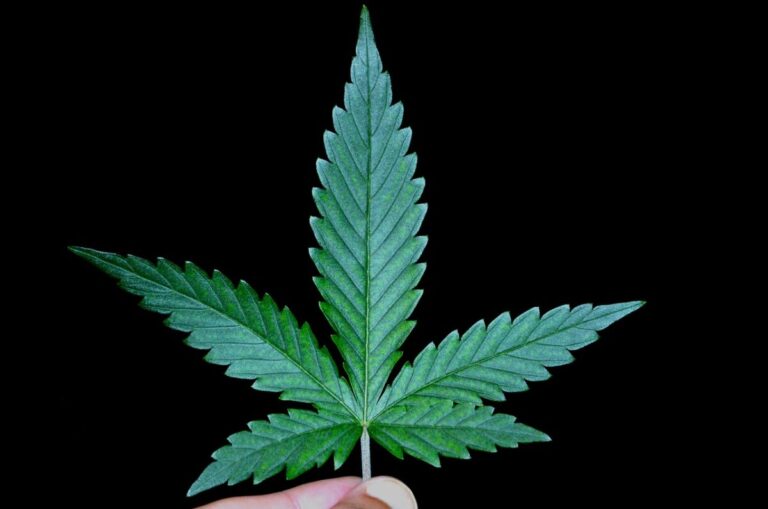
Following the government’s confirmation of the new “Decreto Sicurezza” (Security Decree), the Italian hemp industry has been left in a state of disarray. This decree effectively equates industrial hemp flowers—those with THC content within legal limits—with narcotics. Farmers, legal experts, trade associations, and opposition politicians have all condemned this controversial action, contending that it is ideologically motivated, economically catastrophic, and legally questionable.
Hemp in Italy: sector under pressure
Italy’s industrial hemp sector had been advocating against this outcome for months. Their efforts were unsuccessful, despite the fact that they made numerous attempts to engage the government, such as public conferences, economic studies that emphasized the sector’s potential, and broad parliamentary support. Deputy Prime Minister Matteo Salvini and Undersecretary Alfredo Mantovano strongly supported the enactment of the decree without any transitional measures. Consequently, thousands of organizations suddenly possess products that authorities have reclassified as illicit drugs.
Legal professionals warn that the lack of an exception for disposal is highly irregular. According to lawyer Giacomo Bulleri, regulations typically allow a disposal window for non-compliant products. In this situation, businesses face the decision to either destroy their inventory or risk criminal prosecution. Bulleri suggests isolating affected products and maintaining detailed records as proof of purchase before enforcing the law.
The figures depict a bleak scenario. As Dolce Vita says, More than 20,000 employees are employed by Italy’s legal cannabis light market, which is estimated to be worth more than €2 billion annually. The broader industrial hemp sector has been commended for its environmental benefits and contribution to rural economies, affecting a variety of industries, including food, cosmetics, construction, and textiles.
At present, these industries are on the brink of collapse. Canapa Sativa Italia (CSI), Federcanapa, and Confagricoltura, trade organizations, contend that this decree criminalizes legitimate agricultural practices without scientific justification as Newsweed presents. According to Paolo Vitali, a long-time hemp grower, the move is a betrayal of both democratic values and the government’s previous commitment to supporting small businesses.
“We are being transformed from entrepreneurs into criminals overnight.”
CSI and other associations prepare urgent legal challenges, including emergency court filings in Italy and appeals to the European Commission, to suspend the decree. CSI declared they they will not surrender. They are advocating for the legitimacy of a sustainable, transparent, and highly regulated sector, as well as businesses and their future.
Prospective legal and constitutional obstacles for Italy
The decree is currently under review for its legality. Bulleri and Zaina are constitutional experts and attorneys. They highlight the ban’s lack of scientific foundation. They also point out its incompatibility with EU law. This includes Articles 34 and 36 of the Treaty on the Functioning of the European Union (TFEU). These articles prohibit unjustified trade restrictions within the EU. Past EU court rulings set clear guidelines. The Kanavape case was significant. Authorities cannot ban CBD and hemp products without cause. These products must not have psychoactive effects. They should also meet safety standards. The decree’s immediate implementation lacks prior notification to the European Commission. This is required by the TRIS procedure. It could make the decree invalid at the EU level.
The lawyers contend that the decree lacks the qualities of proportionality and justification. “It contravenes both the constitutional principles of Italy and the market laws of the European Union.” It is a legal time bomb. Many members of the industry are persisting in their refusal to cease operations, despite the imminent legal threats. One cultivator acknowledged, “This is civil disobedience.” “However, we are unable to make a decision.” We will forfeit all that we have accomplished if we cease our efforts at this moment.
Other groups besides the cannabis community have also faced a cold reception to the decree. Significant agricultural organizations, such as Confagricoltura and Coldiretti, back hemp producers. Stefano Masini from Coldiretti stated that they cultivate hemp within the common European market, and in other countries, the entire plant, including the flower, has legal uses. Italian businesses must compete on an equal basis. The CBD sector is also at risk due to the decree, as it is still anticipating a final court ruling on a distinct government initiative to classify CBD oils as narcotic drugs. The implications of the current decree are already widespread, causing confusion in supply chains and retail displays, despite the fact that this aspect remains unresolved.
Hemp cultivators: from farmers to felons?
The message this conveys to entrepreneurs and citizens is potentially the most concerning. Valentina Capone, president of a hemp development center in southern Italy, stated, “Producers, processors, retailers—everyone who believed in this sector as a beacon of innovation and sustainability—now faces treatment as criminals.” We will stand firm. Prominent agricultural organizations underscored the absurdity of equating non-psychoactive hemp with illicit narcotics in a joint statement. “This isn’t just a legal matter.”
“The deterioration of democracy unfolds when a government can transform 30,000 employees into criminals overnight, without any debate, evidence, or justice.”
An uncertain path lies ahead. The authorities will publish the decree in the Gazzetta Ufficiale shortly, and then they will enact it as law.
Parliament has a 60-day period in which to either convert or repeal it. The sector is preparing for a protracted and expensive battle, as a result of the anticipated surge of legal actions. However, the hemp community in Italy conveys a single message: resilience and unity. Vitali declared, “We will resist.” “We are accountable to our workers, our land, and the future that we have worked tirelessly to cultivate.”